




This spring has challenged crop establishment across many regions. Cold temperatures and excess moisture delayed seeding operations and slowed early crop development. Under these conditions, one of the most common questions becomes:
How do we help crops move quickly through the growth cycle while maintaining yield potential?
The answer is closely connected to plant energy, nutrient availability, and the ability of the crop to efficiently transition between growth stages.
During early development, crops require a significant amount of energy to establish roots, expand leaves, develop chlorophyll, and build the structures necessary to support future yield. However, cold and, or wet soils reduce root activity, nutrient diffusion, and metabolic efficiency.
Under these environmental conditions, plants often become “energy limited.”
In addition, even when nutrients are present in the soil, the crop may struggle to access them efficiently because:
- root growth slows,
- nutrient mobility decreases,
- microbial activity declines
- oxygen restriction under excess moisture conditions can impair respiration and ATP production, reducing the energy available for nutrient uptake during the early stages of crop development.
As a result, crops frequently remain stuck in slower vegetative development, delaying canopy closure, flowering, and ultimately maturity.
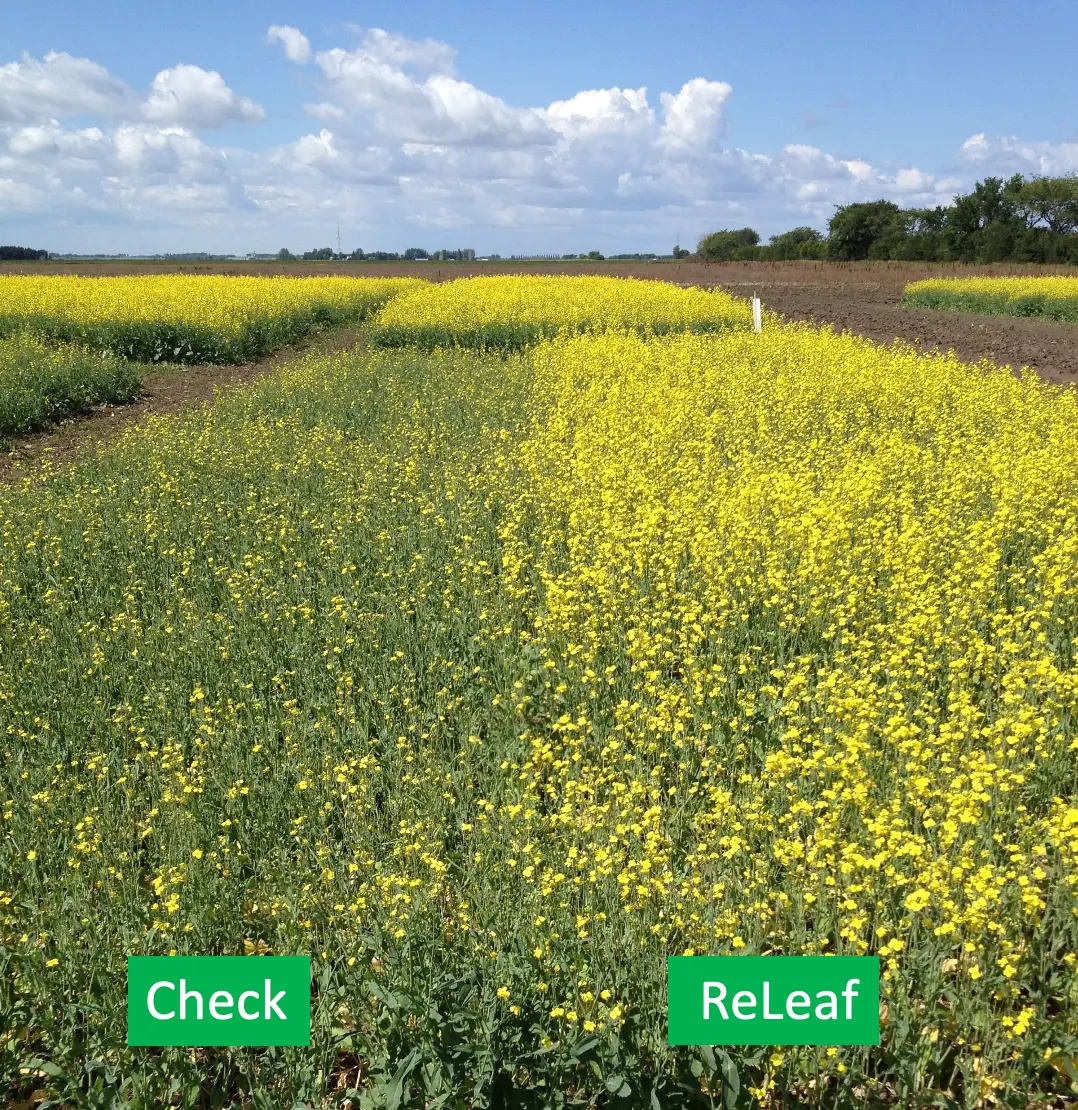
How can foliar nutrition help crops move through growth stages more efficiently?
Foliar nutrition can support the crop during these periods by supplying nutrients directly to the leaves when root uptake is temporarily restricted or when nutrient demand exceeds root supply. Foliar applications help maintain crop momentum and support the transition toward reproductive development by sustaining metabolic activity, photosynthesis, and nutrient movement inside the plant during critical growth stages.
Several nutrients play an important role in supporting crop progression and maturity, for example:
Phosphorus supports ATP production and energy transfer, helping maintain root growth, early vigor, and crop development under cold conditions.
Potassium is highly involved in water regulation, sugar movement, and carbohydrate translocation, helping move energy toward reproductive tissues and grain fill.
Boron plays an important role in root development, sugar transport, flowering, pollen viability, and reproductive development.
Zinc supports hormone production, enzyme activation, and early plant growth, particularly under stressful environmental conditions.
With that, crops with balanced nutrition during early and reproductive stages often appear:
- more vigorous,
- more advanced,
- and more uniform.
This can contribute to:
- faster establishment,
- reduced stress,
- improved nutrient efficiency,
- and sustained photosynthetic activity throughout the season.
How can biostimulants help crops move through growth stages more efficiently?
Biostimulants, such as Cellburst and Convey technologies, can also help support crop development by increasing metabolic activity, enhancing chlorophyll production, and improving CO₂ assimilation, resulting in higher photosynthetic rates. Higher photosynthetic rates can increase biomass production and overall crop productivity.
In addition, they can support crop development under adverse environmental conditions, including cold stress, heat stress, water stress, and stress associated with herbicide or fungicide applications.
Cellburst Technology:
- Improves the plant’s ability to absorb nutrients
- Increases the plant’s capacity to store carbohydrates, which are used to fuel growth and development
Convey Technology:
- Improves nutrient use efficiency
- Strengthens antioxidant defenses
- Enhances stress tolerance
- Increases photosynthetic activity and respiration rates
By improving stress tolerance, metabolic efficiency, and recovery capacity, plants can allocate more energy toward growth and reproductive development instead of stress response and recovery alone.

Our ReLeaf line combines targeted foliar nutrition with two advanced biostimulant technologies, Cellburst + Convey, to help crops recover and thrive during challenging early-season conditions.
ReLeaf:
Gives seedlings a second boost by helping crops break through the slow vegetative growth often caused by cool, wet conditions
Relieves crop stress by proactively supporting plants through environmental stress and “herbicide hangover”
Promotes deeper, stronger root development to drive overall crop productivity and performance in challenging conditions.
By supporting plant energy, nutrient movement, and metabolic activity during critical growth stages, ReLeaf ensures the crop continues progressing toward its yield potential, even during seasons where environmental conditions delay early development. Contact your ATP representative to learn which ReLeaf solution best fits your crop and growth stage.